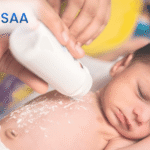
Most new parents encounter jaundice within the first week of their baby’s life. The skin takes on a yellowish tint, the whites of the eyes may look yellow, and someone, a nurse, a family member, a well-meaning neighbour, mentions the word “jaundice” and then everything stops feeling straightforward.
The reassuring part: newborn jaundice is extremely common and, in most cases, resolves on its own without any treatment. The important part: not all jaundice is the same, and knowing what to watch for means you can catch the small percentage of cases that need medical attention before they become serious.
Why Newborns Get Jaundice
When a baby is born, the body begins breaking down the extra red blood cells that were needed during life in the womb. This breakdown produces bilirubin, a yellowish pigment. In adults and older children, the liver processes bilirubin efficiently. In newborns, the liver is still developing and can’t always keep up, so bilirubin builds up in the blood and settles into the skin and eyes, creating the yellow colour.
This is called physiological jaundice, and it’s considered a normal part of the newborn transition. It typically appears on day 2 or 3 of life, peaks between days 3 and 5, and clears on its own by the end of the first two weeks in full-term babies.
What Normal Jaundice Looks Like
Physiological jaundice begins in the face, forehead and nose usually show yellowing first, and may gradually move down to the chest and abdomen as bilirubin levels rise.
A simple check: press gently on your baby’s forehead or nose with one finger. When you lift the finger, the skin underneath should look yellow if bilirubin levels are elevated. This works best in natural light, indoor lighting, especially yellow-toned light, can make even normal skin look yellowish and mislead you.
A baby with normal physiological jaundice should still be feeding well, sleeping in reasonable patterns, producing adequate wet and dirty nappies, and responding normally to you. If the jaundice is only in the face and chest, the baby is feeding actively, and these signs are all present, this is almost certainly physiological and should be monitored rather than panicked over.
When to Be Concerned
Certain patterns of jaundice require prompt medical evaluation. Take your baby to a doctor immediately if:
- Jaundice appears within 24 hours of birth: This is not physiological. Early-onset jaundice can indicate blood group incompatibility (Rh or ABO) or infection, both of which need treatment.
- Yellow colour reaches the legs and feet: This suggests higher bilirubin levels and requires a blood test to assess whether treatment is needed.
- The baby is difficult to wake up for feeds: High bilirubin is toxic to the developing brain. A baby who is unusually sleepy, limp, or difficult to rouse, especially combined with visible jaundice, needs urgent evaluation.
- Jaundice persists beyond two weeks in a full-term baby: Prolonged jaundice can indicate underlying conditions including liver problems that need diagnosis.
- The baby has high-pitched crying, arching of the back, or is not feeding at all: These are signs of acute bilirubin encephalopathy, a medical emergency. Go to a hospital immediately.
- Stools are white, pale, or clay-coloured: This suggests a problem with bile flow from the liver and requires urgent evaluation regardless of how jaundiced the baby appears.
What Helps at Home
Feeding frequently is the most effective thing you can do. Breast milk or formula helps the gut move bilirubin out through stools. Aim for 8–12 feeds in 24 hours for a newborn. If the baby is too sleepy to feed, wake them gently at least every 3 hours.
Sunlight exposure, filtered through a window, not direct outdoor sun, can help mild jaundice, but this is a supplement to feeding, not a substitute for medical assessment when levels are concerning. Never place a newborn in direct sunlight outdoors to treat jaundice.
Swaasaa: Postnatal Support When You Need It Most
At Swaasaa, our trained baby caretakers and postnatal support team across Punjab, Haryana, Delhi, and Mumbai help new parents navigate exactly these early concerns, monitoring newborn health, supporting feeding routines, and identifying when something needs a doctor’s attention. If you’ve just brought your baby home and want professional support during the most uncertain first weeks, reach out. That’s what we’re here for.
Popular Posts

Symptoms of COVID-19






Elderly Care Tips at Home
Renting Medical Equipment for home care