Bathing a bedridden or frail elderly patient is one of the most physically and emotionally demanding parts of home caregiving. It’s also one that families often figure out through trial and error, sometimes causing discomfort, sometimes risking injury, and nearly always underestimating how much preparation it takes to do it safely.
This guide is for caregivers who are doing this at home, often without formal training, and need a practical approach that protects both the patient and themselves.
Why It Matters Beyond Hygiene
The obvious reason to bathe a patient regularly is cleanliness. But the health reasons go further.
Regular washing prevents skin breakdown, particularly in areas where moisture accumulates (skin folds, the groin, underarms) and where pressure is constant (tailbone, heels, hips). Uncleaned skin in these areas develops irritation and infection quickly, especially in patients who are incontinent or perspire significantly.
Bathing also provides an opportunity to inspect the skin for early signs of pressure sores, rashes, or infections that might otherwise go unnoticed under clothing. Catching these early makes treatment straightforward. Missing them until they’re advanced creates serious medical complications.
Bed Bath: The Standard Method for Bedridden Patients
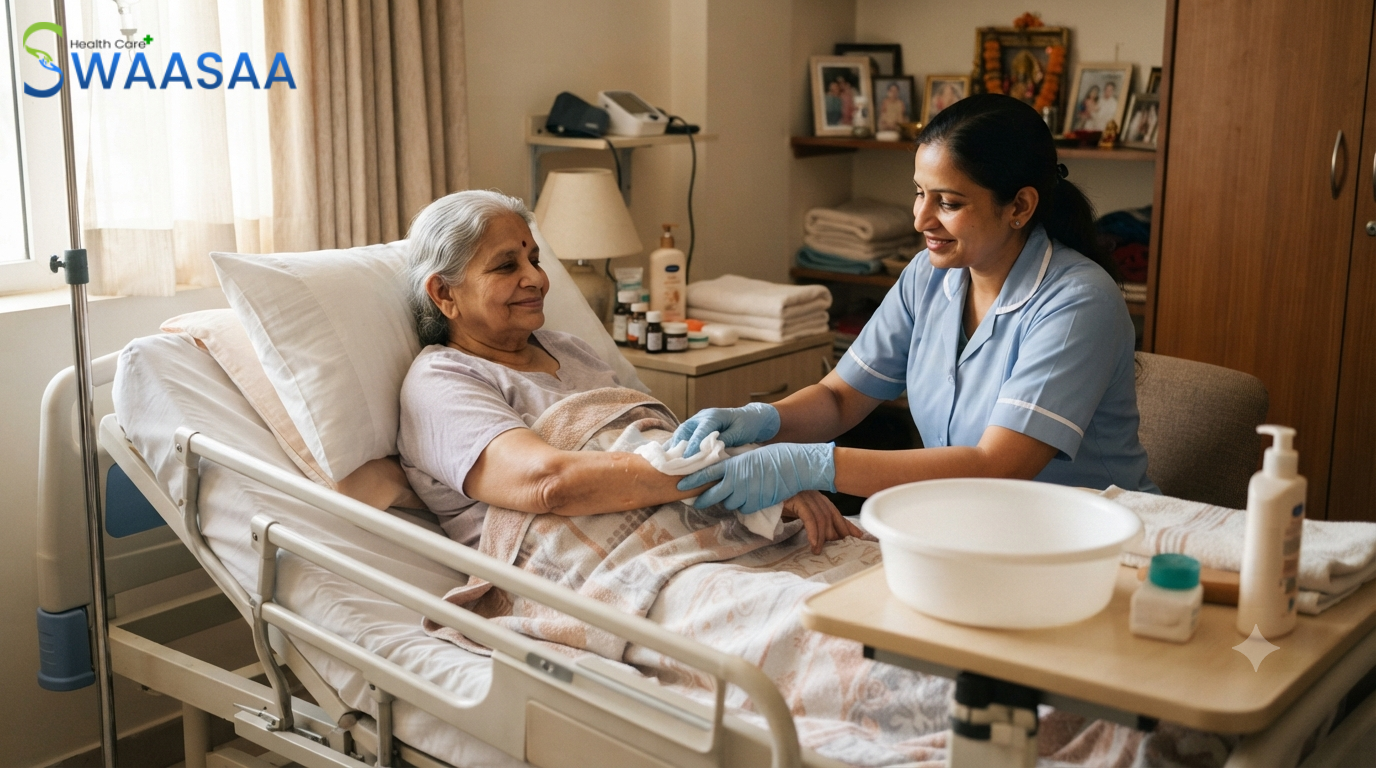
A bed bath is how most bedridden patients are washed, no moving to a bathroom, no shower chair. Done correctly, it’s effective and reasonably comfortable for the patient.
What you need: Two basins of warm water (one for washing, one for rinsing), soft washcloths or bath sponges, mild pH-balanced soap or no-rinse bathing solution, a large towel or two, clean clothes or a hospital gown, disposable gloves, and a waterproof sheet or pad to protect the mattress.
The process:
- Start by explaining what you’re about to do. This matters as patients who are cognitively impaired or anxious respond better when they know what’s coming rather than being handled without warning.
- Work systematically. Most caregivers start from the face and head (using plain warm water, no soap near the eyes) and move downward towards the neck, arms, chest, abdomen, legs, and feet while leaving the genital area and back for last. This sequence keeps the cleanest areas from being contaminated with rinse water from later steps.
- Expose only the area being washed at any given time, keeping the rest covered with a towel or blanket. This maintains dignity, prevents chilling, and keeps the patient warmer throughout.
- Wash with one cloth, rinse with another, and dry thoroughly before moving to the next area. Leaving skin damp, especially in folds, is where skin breakdown starts.
- For the back, you’ll need to turn the patient to one side. This is the step that most often requires two people, particularly for heavier patients. If you’re managing alone, use pillows to support the patient in a side-lying position while you wash and dry the back.
- Genital area care requires gloves and particular attention to thorough rinsing and drying. For patients with catheters, follow the specific care instructions given by the treating team as the catheter site needs careful cleaning without pulling on the catheter.
Hair Washing for Bedridden Patients
Hair doesn’t need to be washed at every bed bath, but it needs to happen regularly, weekly at minimum for most patients. Dry shampoo handles intervals between washes reasonably well.
For actual hair washing, an inflatable hair washing basin (available at medical supply shops) lets you wash hair in bed without getting the patient or mattress wet. Position the basin under the head, support the neck, use lukewarm water, and rinse thoroughly. Wet hair left against a pillow for hours causes scalp irritation.
Safety Considerations
Water temperature: Always test water temperature on your own wrist or forearm before applying it to the patient. Elderly skin is thinner and more sensitive, so what feels comfortably warm to you may be uncomfortably hot to them.
- Slipping: Even during bed baths, patients can slide or shift position. Keep the bed rails up on the far side and work from one side at a time.
- Your own back: Caregivers who develop back injuries are a common and serious problem in home care. Keep the bed at a working height where you’re not bending excessively. If the bed doesn’t adjust, consider a hospital-grade rental bed.
- Dignity: Speak to the patient throughout. Even patients who cannot respond are aware of being handled. Maintain the same respect you’d want shown to yourself.
Swaasaa: Trained Home Caregivers Who Handle This Every Day
At Swaasaa, our trained patient caretakers provide daily personal care, including bed baths, skin inspection, and hygiene management, for bedridden and elderly patients across Punjab, Haryana, Delhi, and Mumbai. Our caregivers are trained in safe patient handling, pressure sore prevention, and maintaining dignity during personal care. If you’re managing this alone and finding it difficult, you don’t have to. Reach out and we’ll help you put the right support in place.
Popular Posts

Symptoms of COVID-19





Elderly Care Tips at Home
Renting Medical Equipment for home care