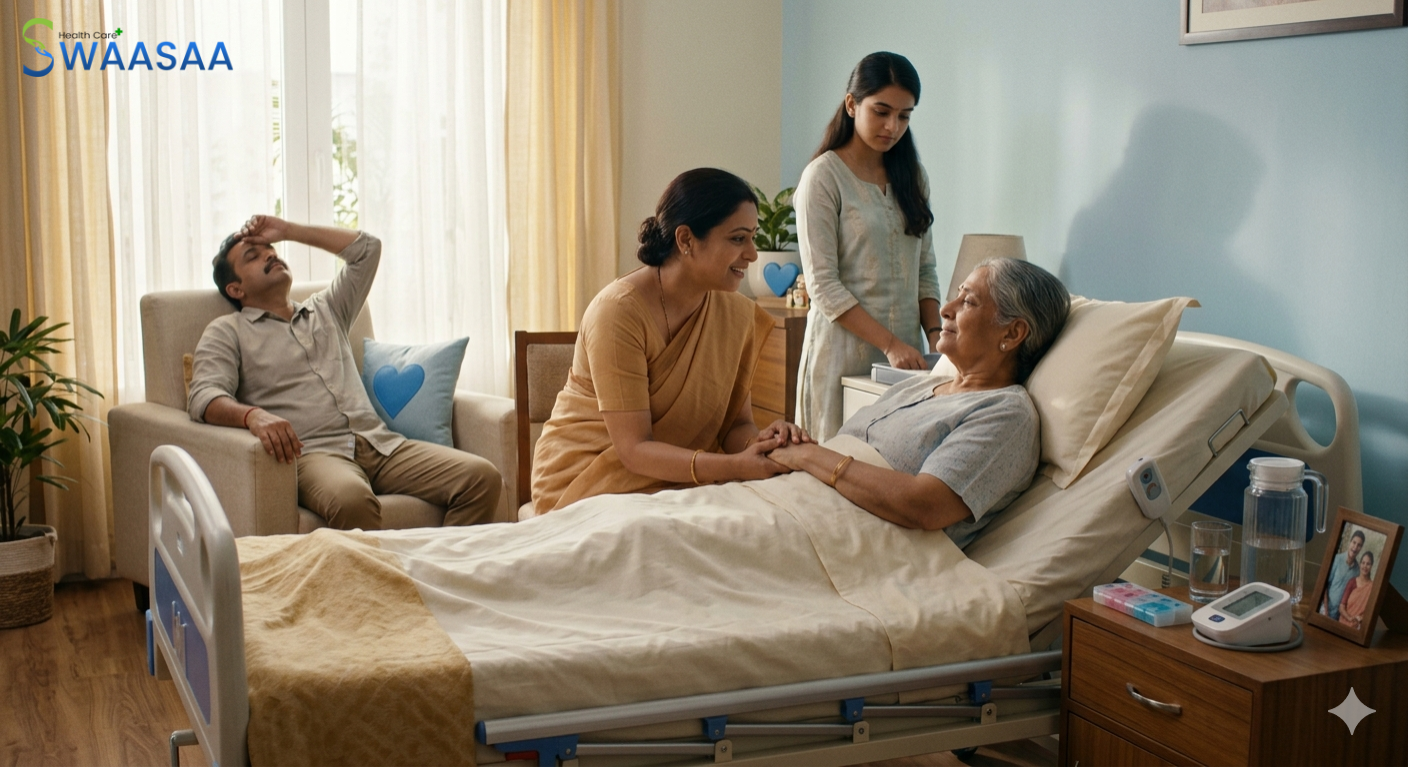
Nobody signs up to become a caregiver. It happens, a parent has a stroke, a spouse comes home after surgery, an elderly relative can no longer manage alone, and suddenly someone in the family absorbs a role they were never trained for, never fully prepared for, and rarely given enough support to sustain.
For a few weeks, most families manage. It’s hard but doable. The problem is when weeks become months. And it almost always becomes months.
What Caregiver Burnout Actually Looks Like
Burnout in caregivers doesn’t usually arrive as a dramatic breakdown. It builds quietly. The signs tend to get dismissed or rationalised away until they’re impossible to ignore.
Persistent exhaustion that sleep doesn’t fix is typically the first thing. Not tiredness from a bad night, the bone-deep fatigue that comes from being on-call around the clock, from light sleeping because you’re listening for sounds from the next room, from never fully switching off.
Irritability follows. Short fuses over small things. Resentment, not of the patient specifically, but of the situation, that feels shameful to acknowledge. Many family caregivers feel deeply guilty about this, which adds a layer of emotional weight on top of an already heavy load.
Withdrawal comes next. Cancelling plans. Losing interest in things that used to matter. Social isolation that starts as a necessity and gradually becomes normal.
And then there’s the physical toll: back pain from lifting and repositioning, headaches, a suppressed immune system from chronic stress. Caregivers who’ve been doing this for six months or more frequently report health problems of their own that went unaddressed because they were too focused on someone else.
Why Families Wait Too Long to Ask for Help
The honest answer is that asking for help feels like admitting failure. In Indian families especially, caring for an ill or elderly parent at home carries deep emotional significance. Bringing in an outside caretaker can feel like stepping back from a responsibility that was always meant to be personal.
What this logic misses is that the quality of care, not just the presence of care, matters to the patient. A burned-out caregiver who is physically exhausted and emotionally depleted cannot provide the same attentiveness, patience, or skill as someone who is rested and professionally trained. This isn’t a character flaw. It’s physiology.
Practical Strategies That Actually Help
- Rotate responsibility within the family: If there are siblings or other relatives involved, structured rotation, specific days, specific tasks, prevents one person from absorbing everything. Informal arrangements rarely hold because they rely on people stepping up voluntarily, and in high-stress situations, everyone assumes someone else has it covered.
- Create protected time off: This sounds obvious but rarely happens without deliberate planning. Even a few hours on certain days where the primary caregiver is genuinely off, not on call, not checking in, matters for recovery.
- Accept that you can’t do everything well: Medical tasks like wound care, catheter management, repositioning schedules, and medication administration require training. Doing them without training increases risk to the patient and stress to the caregiver. Recognising which tasks need professional hands is not weakness, it’s clear-thinking.
- Talk to someone: Caregiver support groups exist in most cities now, in-person and online. The simple act of being heard by people who understand the specific exhaustion of this role is therapeutic in ways that general advice often isn’t.
When Professional Home Care Changes Everything
There’s a version of this situation that works. It’s the one where a trained professional handles the clinical and physically demanding aspects of care, repositioning, hygiene, medication monitoring, early complication detection, while the family focuses on presence, emotional support, and rest.
That division doesn’t reduce the family’s role. It makes the family’s role sustainable.
Swaasaa: Professional Home Care That Supports the Whole Family
At Swaasaa, we understand that a bedridden patient’s wellbeing and their family’s wellbeing are directly connected. Our trained patient caretakers across Punjab, Haryana, Delhi, and Mumbai handle the demanding day-to-day care, repositioning, hygiene, feeding support, medication assistance, so families can breathe, sleep, and show up fully for the person they love. Every caregiver is background-verified and health-screened before placement. If your family is carrying more than it should, reach out, we’ll help you build a care arrangement that actually works.
Popular Posts

Symptoms of COVID-19






Elderly Care Tips at Home

Renting Medical Equipment for home care